

A note to clients on the Q2 numbers and what to do about them
Each August, I review the software earnings roll-up with one question in mind: What do the numbers mean for the deals my clients will pursue, or wish they had pursued, over the next 12 months? This quarter, the answer is unusually clear. The sector remains healthy, but growth is slowing, and the divide between likely buyers and likely targets is widening. If you run, sponsor, or advise a software company, now is the time to get organized. Robert Bartlett, his colleagues at Jefferies, and the Silicon Valley technology team deserve credit for the report and the hard data behind this post.
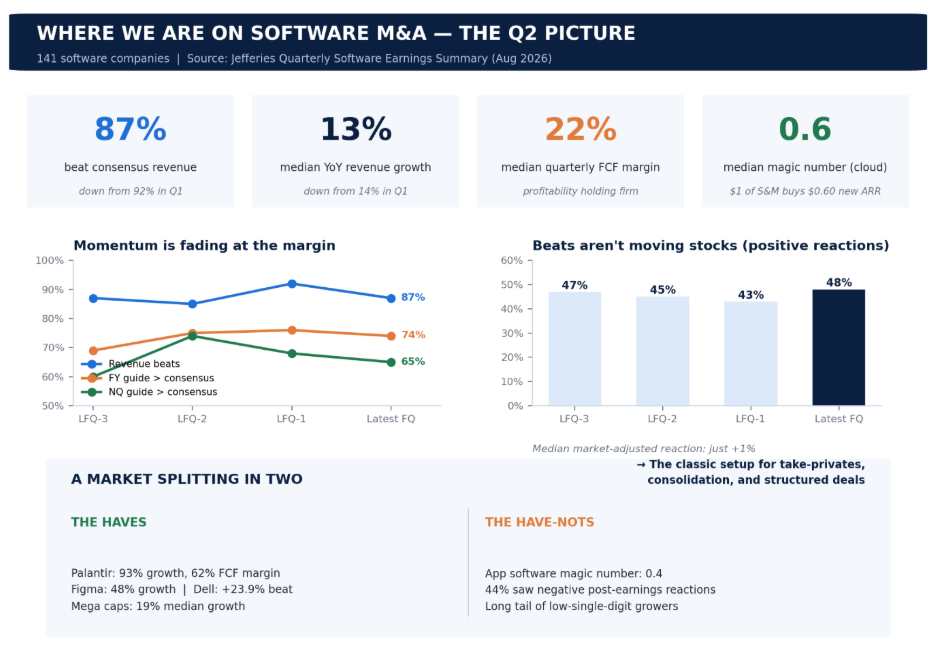
The quarter at a glance. Data: Jefferies Quarterly Software Earnings Summary, August 2026.
The Picture
Most software companies are still beating expectations. That is the good news. The median company is growing at a low-teens rate and generating a 22% free cash flow margin.
The trend, however, is moving in the other direction. Fewer companies are beating expectations or raising guidance, and the market has stopped rewarding those that do. Roughly half of the companies that reported saw their stock decline or remain flat after earnings, and the median reaction was unchanged. When a company beats consensus and its stock does not move, the public market is signaling that it has already decided what the standalone business is worth. Boards eventually hear that message, whether they want to or not.
The differences beneath the medians are striking. Palantir is growing at more than 90% and producing a free cash flow margin most companies would envy. Figma is nearly doubling. Megacap companies are growing faster than their mid-cap peers while also generating more cash. Meanwhile, a long tail of solid businesses is growing at single-digit rates, spending a dollar on sales and marketing to generate 50 cents of new revenue, and trading at multiples that attract sponsors. These businesses may be worth more in another owner’s hands than they are to their current shareholders, and everyone in the room knows it.
What I Expect to See
- The take-private pipeline remains active. Sponsors have been circling smaller public software companies for three years, and the Q2 data gives them plenty to pursue. If you lead a company in this group, expect an approach and decide now how you will respond. Sponsors should expect competitive processes, meaningful go-shops, and special committees familiar with the Chancery Court’s recent opinions.
- Strategic buyers have room to move. Leading companies have both valuable stock and cash. Expect tuck-in acquisitions of AI-native capabilities, along with consolidation in crowded categories such as security and data infrastructure. Larger strategic deals will face more regulatory scrutiny, adding time and complexity to the process.
- Deal structure will bridge valuation gaps. Sellers remain anchored to where they traded 18 months ago, while buyers remain anchored to Friday’s close. Earnouts, CVRs, rollover equity, and other forms of contingent consideration can narrow that divide. I have made a good living litigating earnouts, and I would rather you did not hire me for that. Draft them as though a dispute is inevitable.
Regulatory Scrutiny Is Increasing
Last week, KKR agreed to pay $250 million to resolve the Justice Department’s case concerning its HSR filings for 16 deals completed in 2021 and 2022. The settlement is 20 times the previous record. The allegations did not involve a close call over a merger’s competitive effects; they concerned process, including documents altered before submission, documents omitted from filings, and deals that should have been reported but were not. DOJ initially sought $650 million. KKR admitted no wrongdoing, and reports indicate that outside counsel will cover the payment, which suggests where the government believes responsibility lies.
The message for other dealmakers is clear. The premerger rules became substantially more demanding last year, and the agencies have shown that they will treat filing accuracy as an enforcement priority in its own right, regardless of whether a deal raises competition concerns. That has three practical consequences:
- Treat your deal documents as government exhibits. Every board deck, banker book, and strategy memo that discusses the transaction may be reviewed. Write each one as though the Antitrust Division will read it, because it may.
- Allow more time and money. The expanded filing takes weeks to prepare, and the review clock starts later than it did under the former rules. Factor that timing into bid letters, financing commitments, and board expectations.
- Risk allocation is now a central negotiation. On strategic deals, reverse termination fees, litigation covenants, divestiture caps, and efforts standards are being negotiated as vigorously as price. A seller that accepts regulatory risk should be compensated for it and should require the buyer to make a binding commitment to defend the transaction.
- Acqui-hires and blitz-hires offer alternatives to traditional M&A.
Two Other Things on My Radar
Delaware is no longer the automatic choice. Following last year’s amendments to the corporate code and a steady stream of reincorporations in Texas and Nevada, boards are being asked where they want their companies to be governed. My view has not changed: Delaware’s predictability is worth a great deal when a company is in a dispute. But a board that has not considered the question should expect to be asked why.
AI diligence now has real consequences. Nearly every target presents itself as an AI company. Buyers are asking, and should ask, where the training data originated, what open-source license exposure exists, whether customer contracts permit the data uses on which the product depends, and whether reported AI revenue comes from a product or from repackaged services. Sellers that can answer those questions clearly command better prices. Those that cannot should expect escrows.
The Takeaway
I cannot predict which company will be bought next quarter or which regulator will change course. What is clear is that the coming year will bring greater deal activity, closer scrutiny, and unexpected complications. Prepare before you are reacting to an unsolicited approach, a diligence request, or a regulatory issue. Call me before you need to.