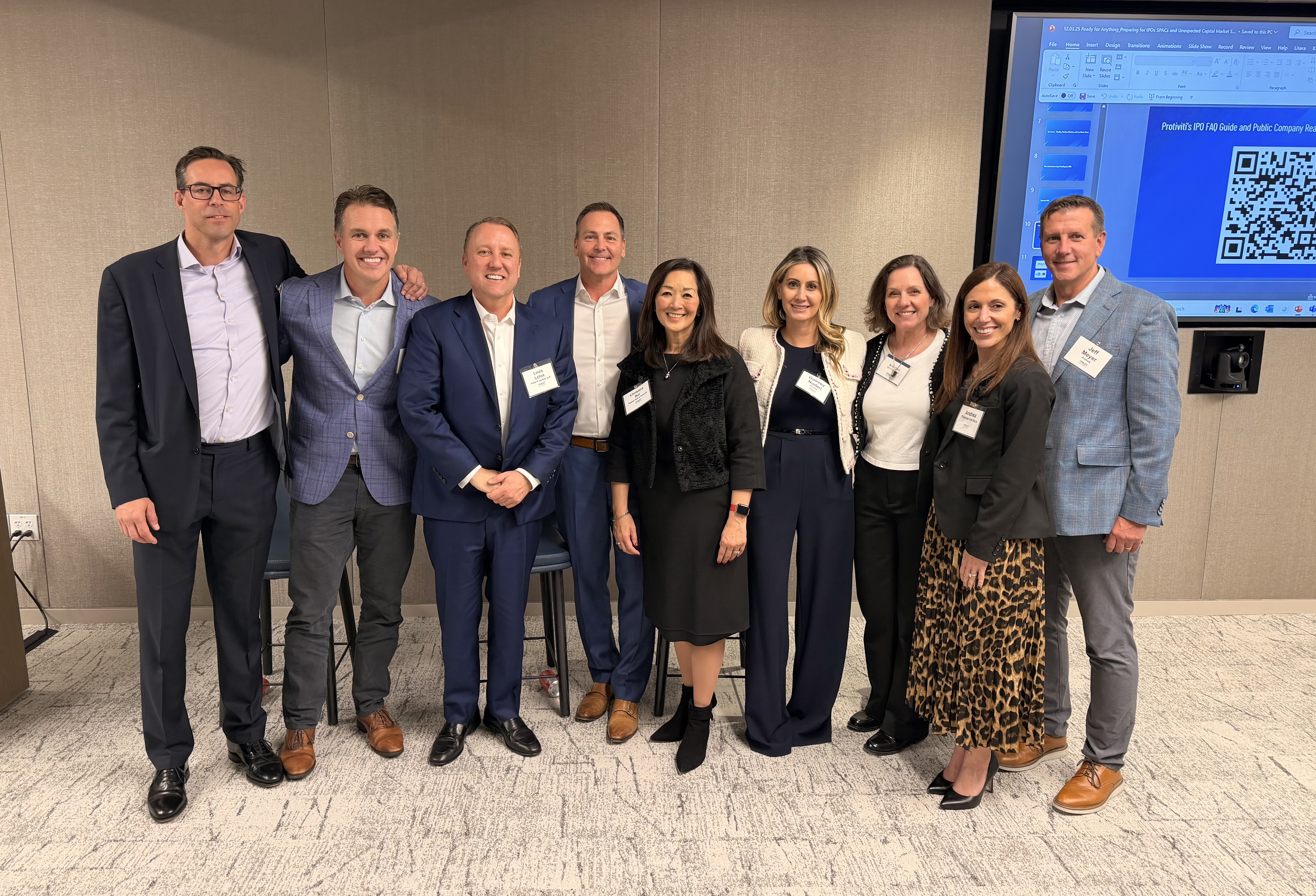
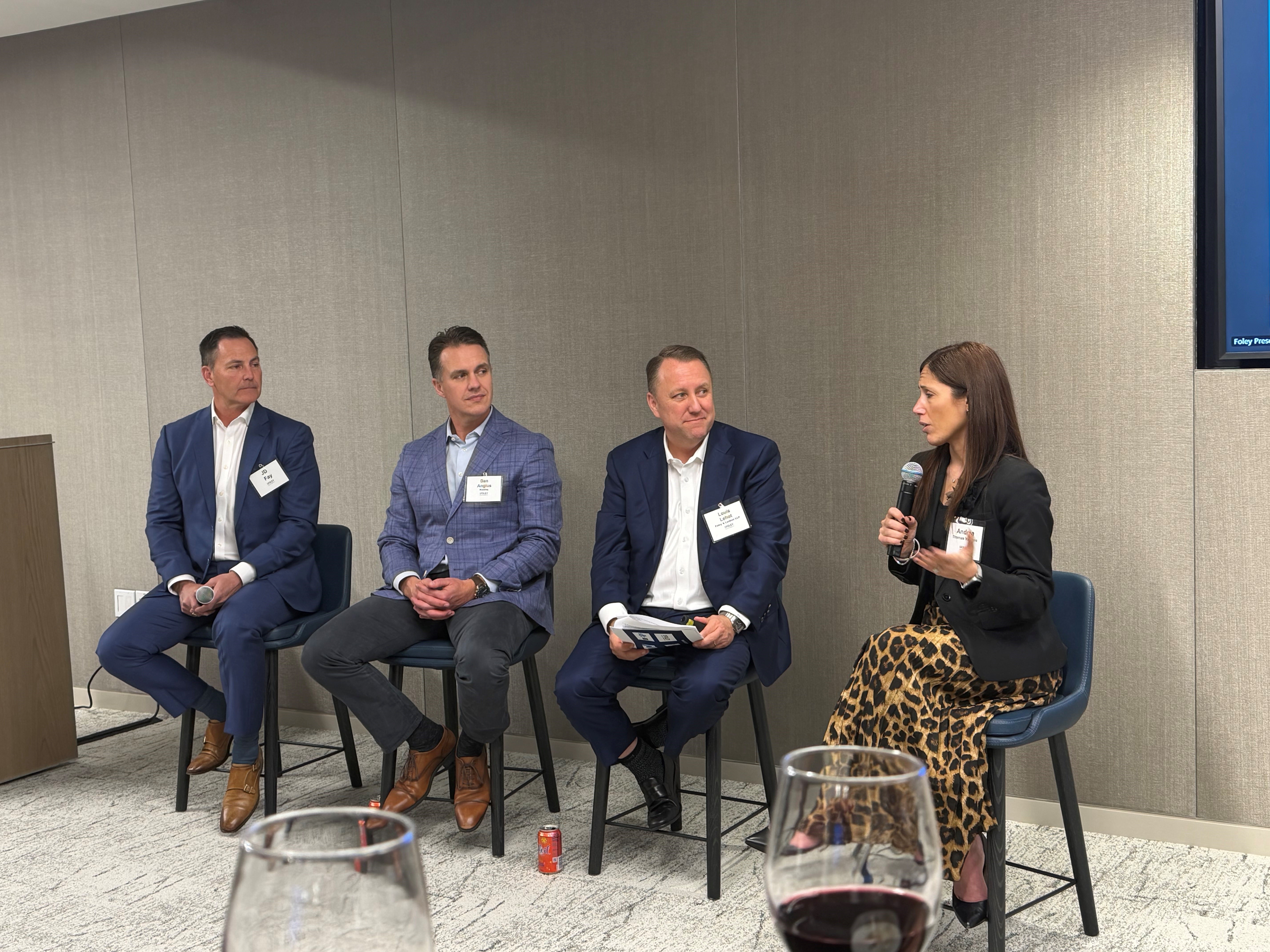
Foley & Lardner, Protiviti and SS&C Intralinks recently hosted an event in Foley’s Silicon Valley office at Palo Alto Center. Moderated by Foley partner Louis Lehot, the session titled “Ready for Anything: Preparing for IPOs, SPACs, and Unexpected Capital Market Shifts,” brought together industry leaders: JD Fay (ex-CFO, Matterport, de-SPAC’d and then sold to CoStar Group), Dan Angus (Managing Director, Nasdaq), and Andrea Vardaro Thomas (Managing Director, Protiviti). Their combined experience provided a roadmap for companies facing the volatile and rapidly shifting capital markets of 2026.
The panel opened with a clear message: In today’s market, readiness is not a fixed date, it’s an ongoing process. Attendees listened to candid war stories, actionable playbooks, and a readiness checklist. Panelists discussed the current market, describing it as a roller coaster run by algorithms, an ocean with shifting liquidity tides, a chessboard where AI plays both sides, and a racetrack fueled by information. These images underscored the complexity and unpredictability facing companies considering public exits.
When (and whether) to pursue an IPO
The first segment tackled the critical question of IPO timing. JD Fay emphasized CFO-level readiness signals of consistent growth quality (margins, retention, cohort health), GAAP discipline, audit and SOX readiness, and credible forecasting. Dan Angus then added the market lens, order book depth, volatility bands, and investor appetite as key indicators. Andrea Vardaro Thomas also highlighted operational maturity, such as accelerated closing, robust controls, and disclosure hygiene. Louis Lehot emphasized the integrated team of advisors approach, and building a process that can handle the unpredictable pivots that business, market and other developments impose on the best of intentions.
A quick audience poll revealed three readiness tiers: file-ready, six-month ready, and 2026 rebuild. The panel all agreed balancing growth and profitability remains a central tension, and CFOs need to prioritize discipline and flexibility as market windows open and close.
The SPAC Reset
SPACs continue to go through a transformation. Louis Lehot presented the four waves of SPAC innovation, and where we are in 2026. Dan Angus explained how SPACs had raised blank check pools in recent months, but that the few de-SPAC mergers that got done did not deliver cash at closing. The panel discussed sponsor quality disparities, PIPE scarcity, redemption risks, and regulatory scrutiny. While SPACs offer speed and structured capital, they also face challenges such as certainty and cost of capital. JD Fay provided an operator’s perspective, planning liquidity around redemption uncertainty and PIPE timing, and managing post-close demands. Andrea Vardaro Thomas outlined the heightened diligence and control upgrades now expected in de-SPAC transactions. Louis Lehot questioned whether the capital structure can evolve to address the oversupply of shares with sellside interest after de-SPAC mergers close.
A “Myth vs. Reality” round challenged common assumptions: SPACs aren’t dead, de-SPACs aren’t always faster, and PIPEs remain a bottleneck.
Private Market Pressures and PE-Driven Timing
Private equity continues to reshape exit strategies. The panel explored sponsor hold periods, fund cycles, DPI targets, and valuation resets. Louis Lehot described how PE operating partners are recalibrating value-creation plans for 2026 exits, while JD Fay discussed boardroom trade-offs such as runway extension, dilution, and signaling to customers and employees. Dan Angus provided insight into cornerstone investors and crossover dynamics.
A scenario vote asked: If rates stay higher-for-longer through mid-2026, what’s your path, IPO, SPAC, strategic sale, or extend private? The panel offered playbooks for each option, emphasizing the importance of scenario planning and agility.
Preparing for Dual-Track and Multi-Track Exits
Dual-track (IPO + M&A) and multi-track (IPO + SPAC + M&A/PE recap) approaches require operational discipline. Andrea Vardaro Thomas detailed control and reporting milestones that unlock optionality, such as SOX scoping, quarterly close acceleration, and audit status. JD Fay shared a readiness checklist: data room architecture, KPI definitions, guidance policy, investor FAQ, and board cadence, and Dan Angus explained the choreography needed to align exchanges, research, and investor education without burning the window.
The “30-Second Playbook” challenge distilled each panelist’s checklist for being decision-ready within 30 days of a window opening, a practical tool for attendees.
War Stories, Volatility, Shutdown Windows, and Last-Minute Pivots
Panelists provided candid anecdotes such as withdrawn offerings, de-SPAC detours, and rapid strategic pivots. They discussed what surprised them and lessons learned. Three cross-cutting principles emerged, such as prioritizing signal management over perfection, preparing contingency plans, and rehearsing hard choices.
Effective crisis communication was highlighted, as well as teams leveraging pre-approved disclosures and playbooks to sustain trust and realign expectations within 24 hours.
What Stakeholders Expect Heading into 2026
Stakeholder expectations are rising. Private equity partners want clear value-creation proof points, audited KPIs, and board-level cadence. Legal teams focus on disclosure discipline, Reg FD hygiene, and robust controls. Bankers and exchanges prioritize investor segmentation, early diligence, and consistent metrics, and CFOs are tasked with forecast philosophy, narrative integrity, and change management.
The unifying checklist: “Narrative + numbers + agility.” Panelists urged companies to pick two priorities to implement this quarter across finance, legal, and banking teams.
Closing Takeaways
The discussion left the audience with ideas to further ponder: Keep multiple paths viable, don’t bet on a single exit strategy, operationalize investor-grade discipline early, build public company muscle before you need it. Be ready to pivot, practice decision-making under pressure so you’re ready when the window opens or closes unexpectedly.
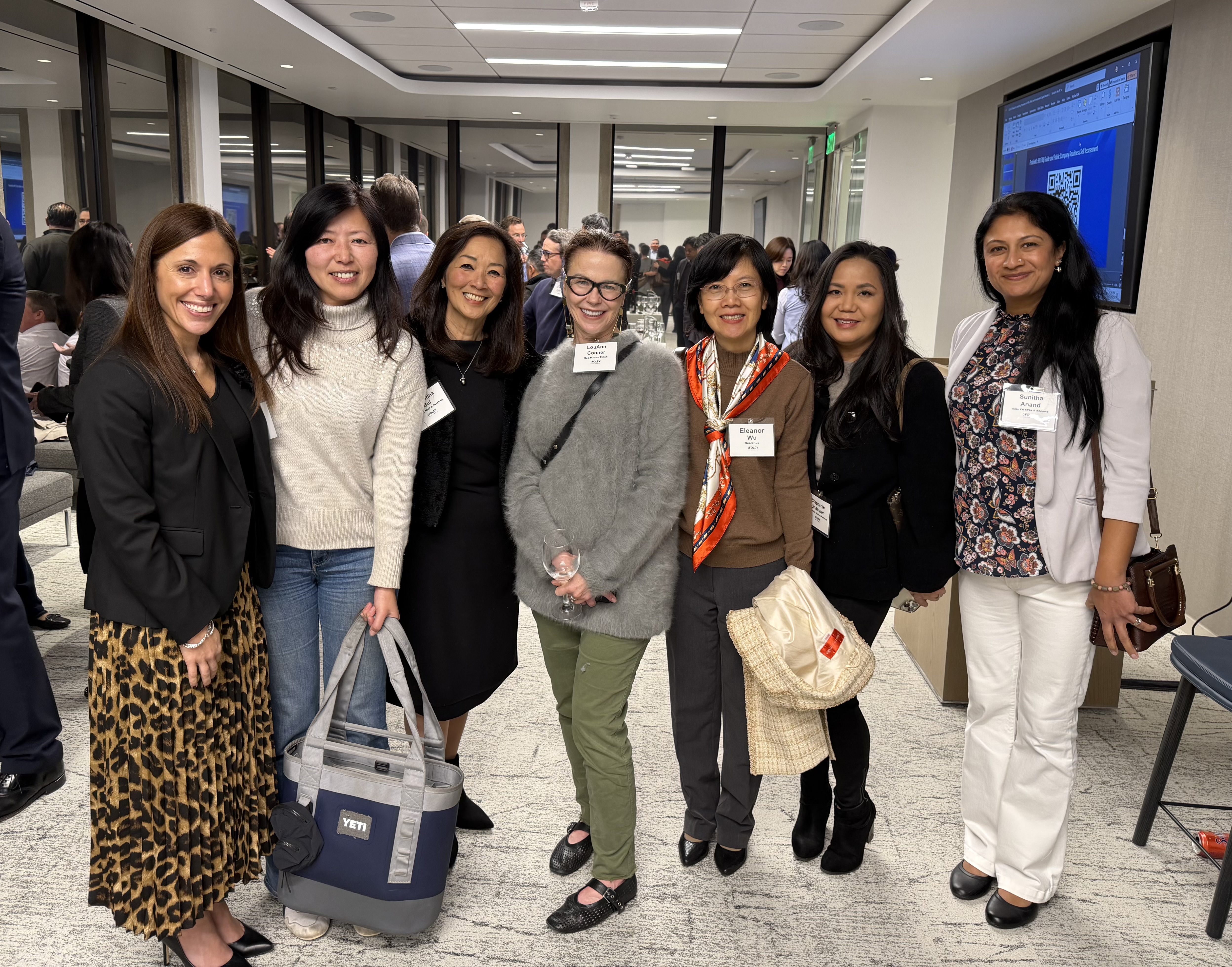
The event was “standing room only” and participants enjoyed fine foods and high spirits well into the evening. Participants stayed long after the formal discussions ended to make new friends, see old friends and deepen relationships.